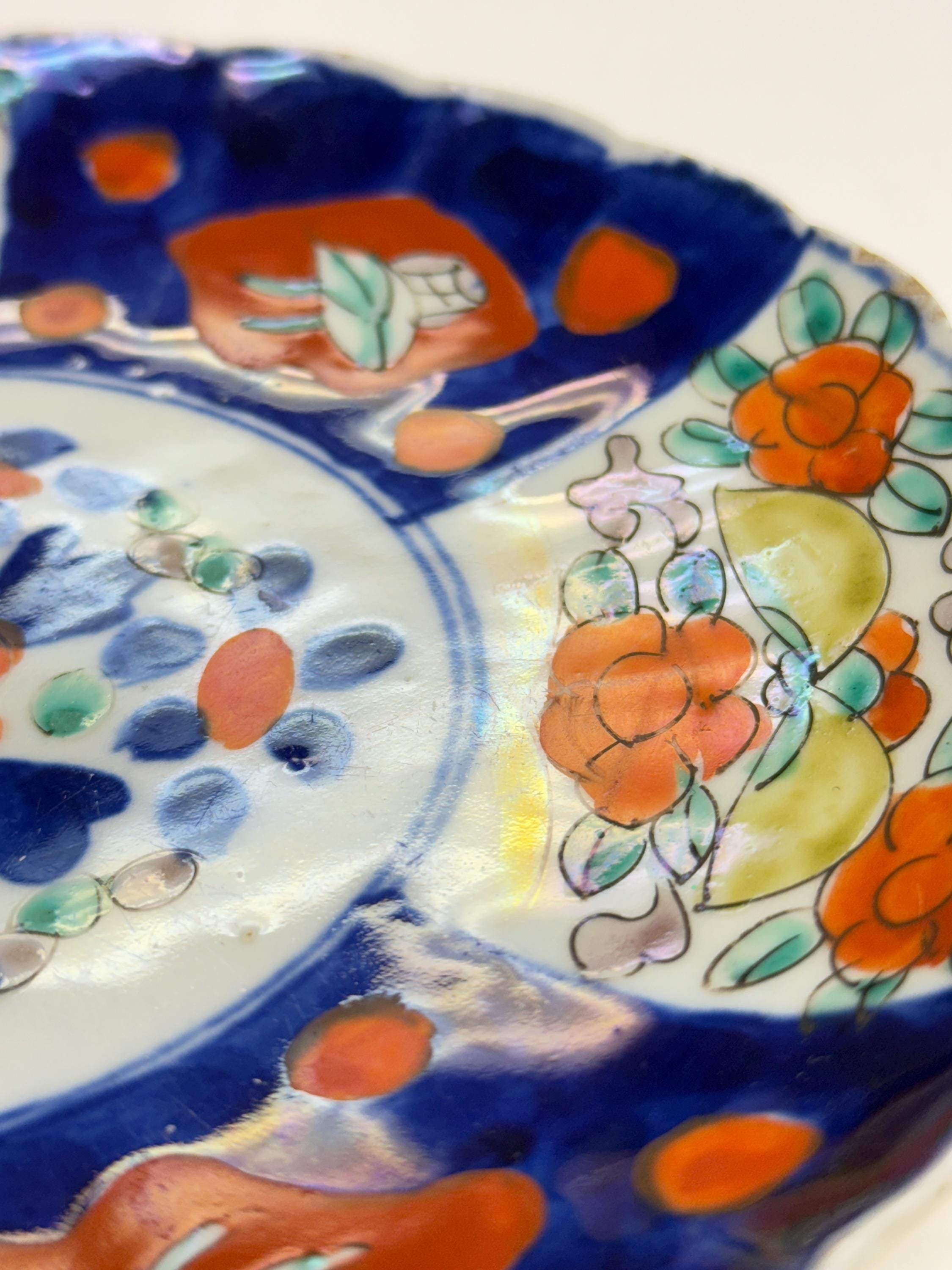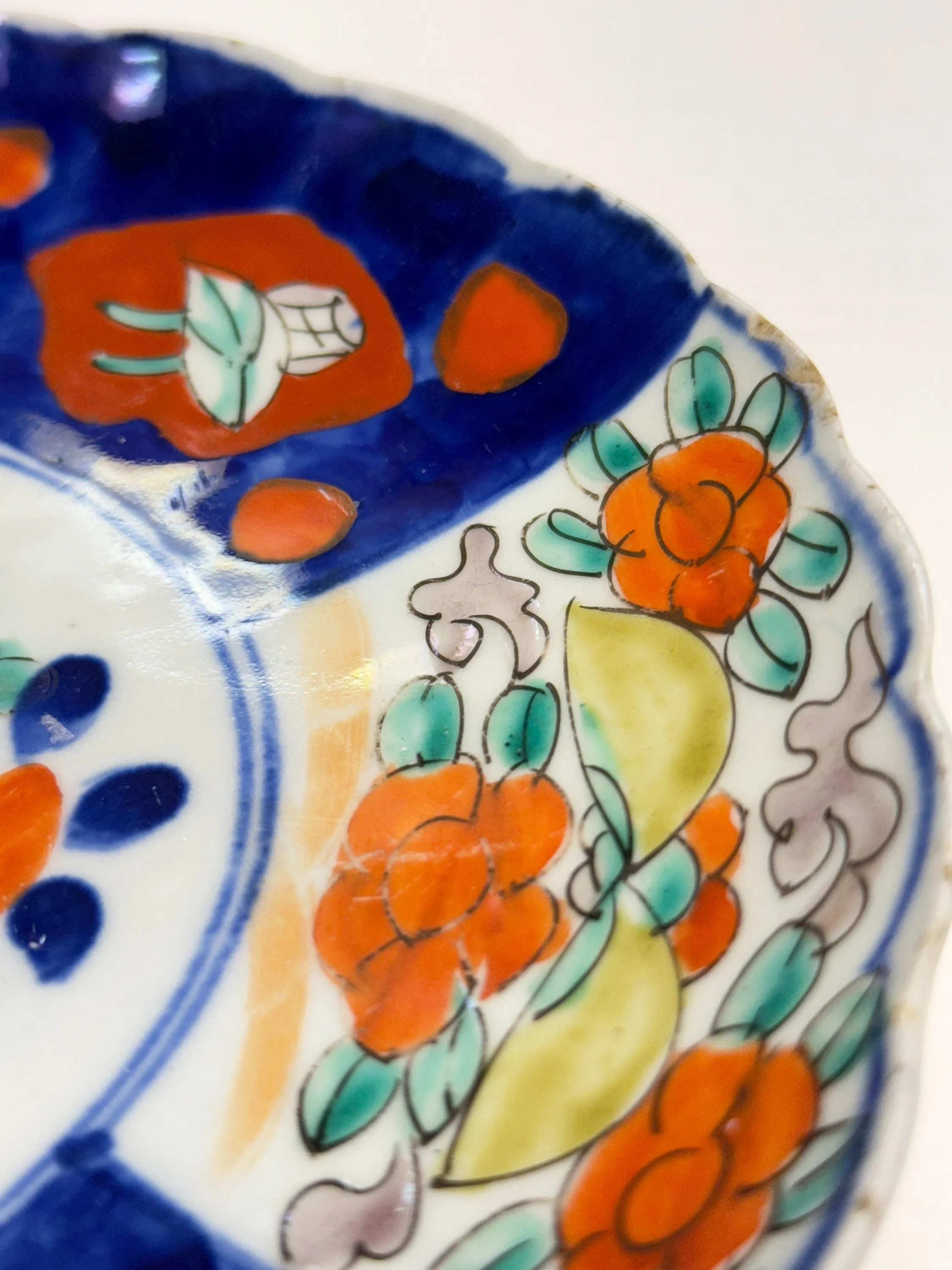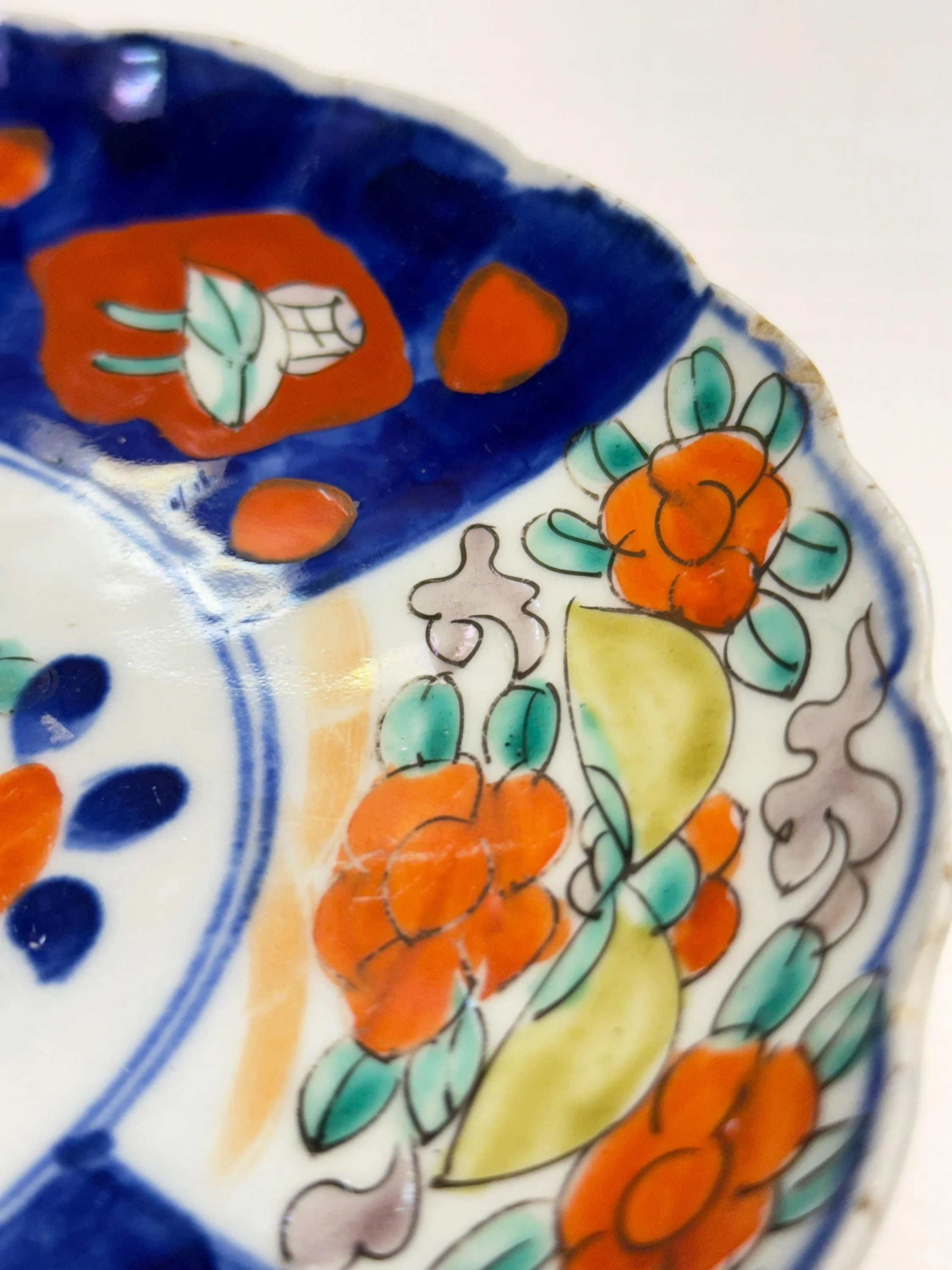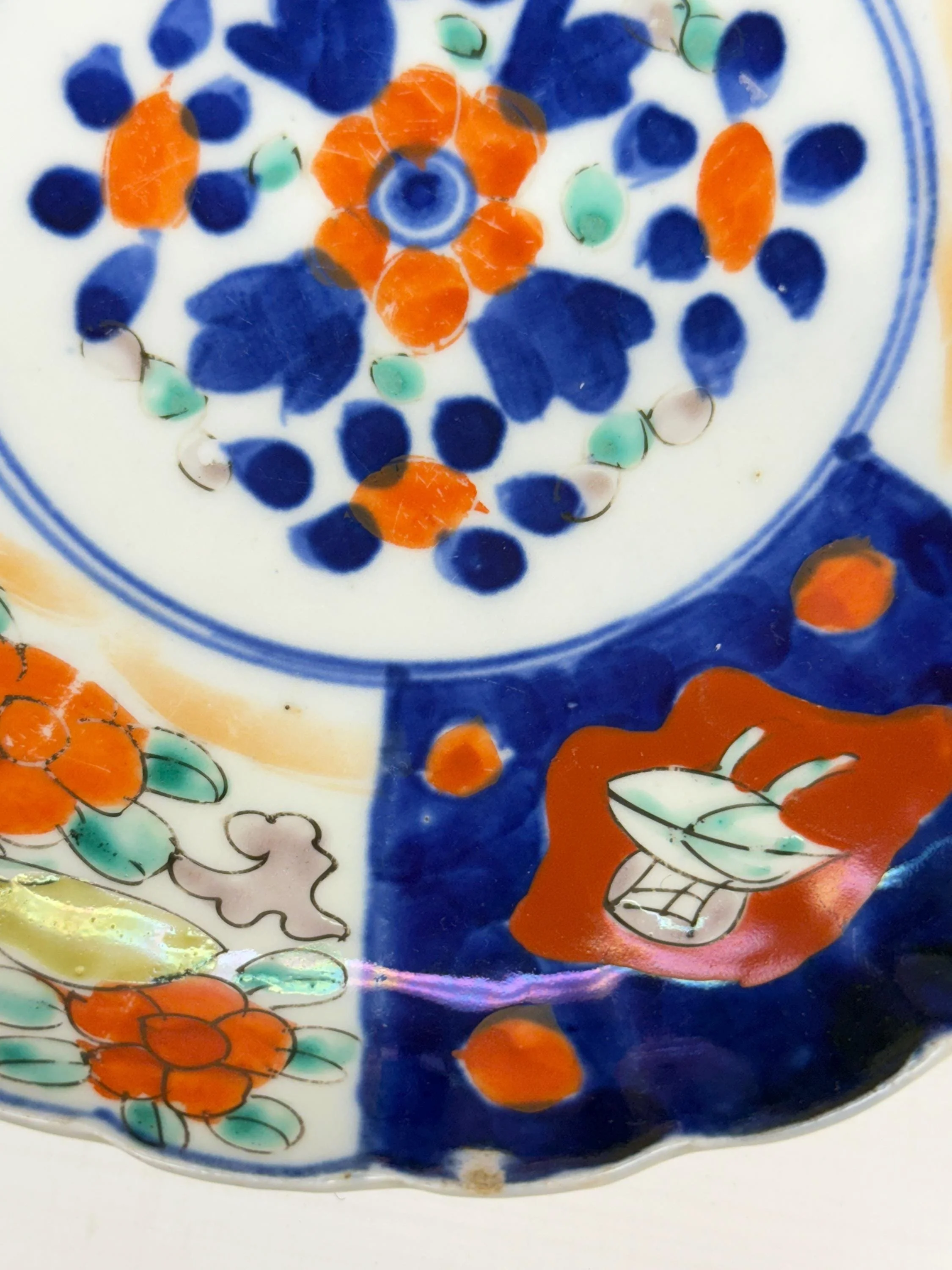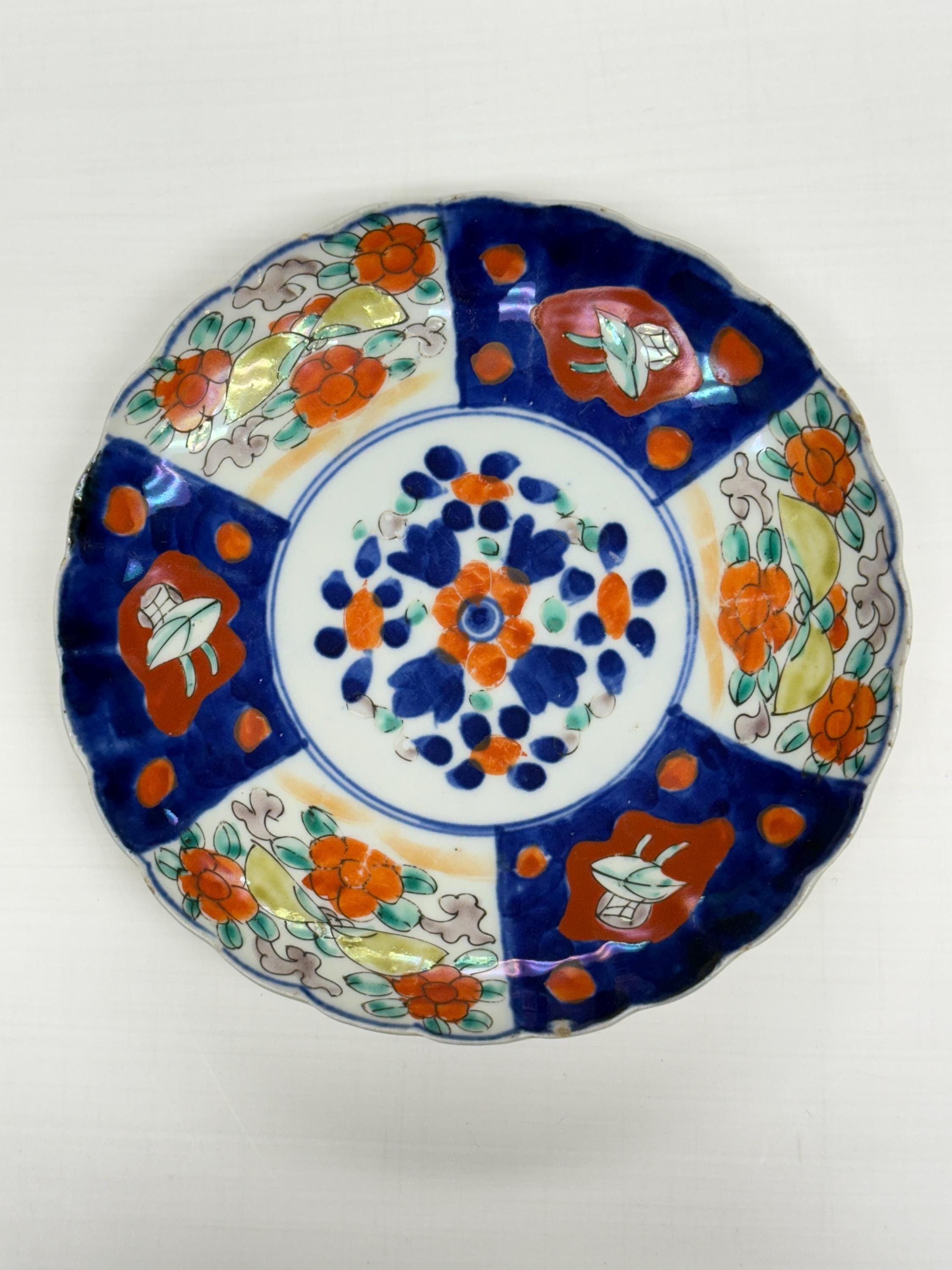
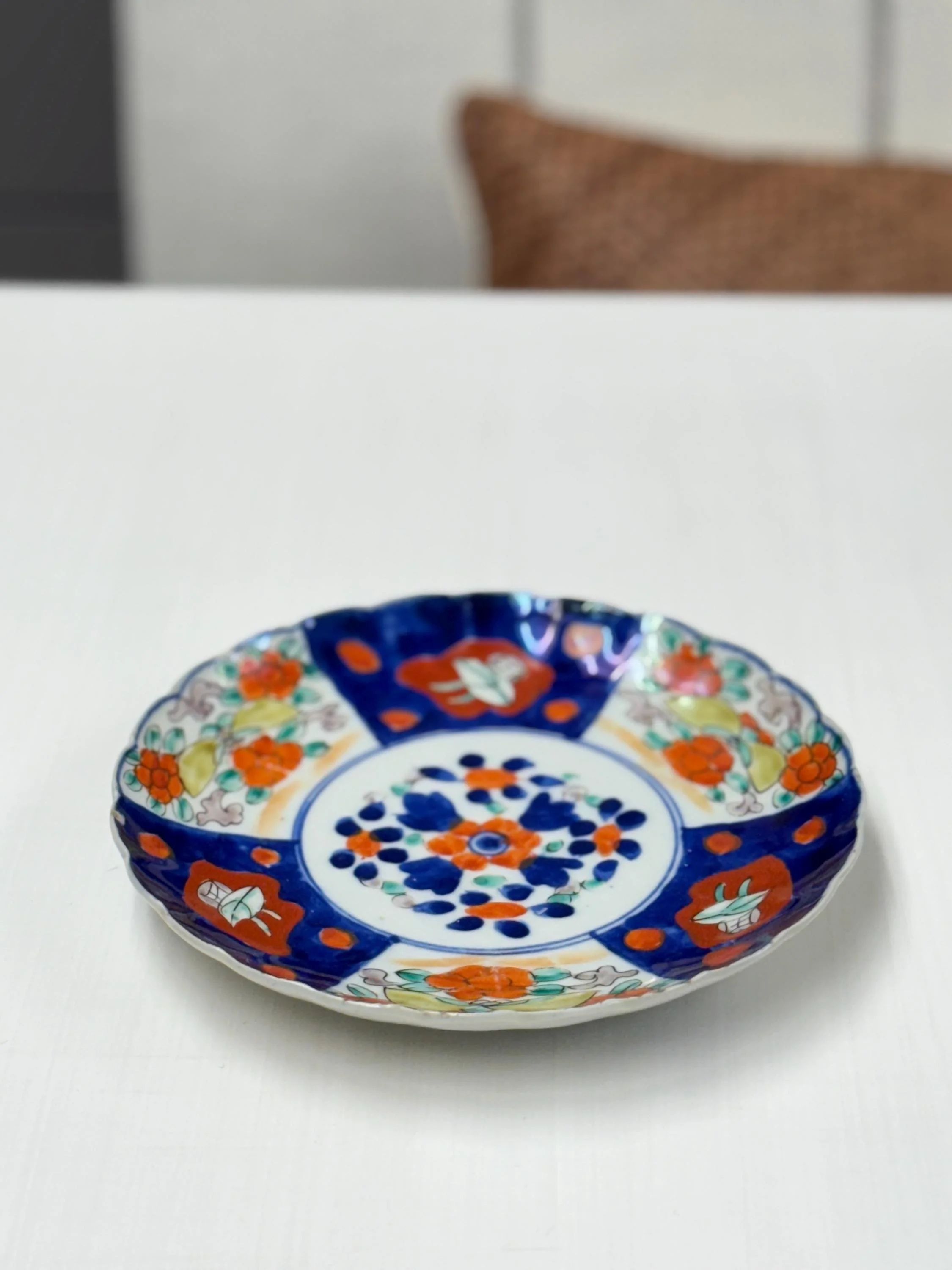
This beautiful hand-painted Japanese Imari porcelain plate features a classic panel design with vibrant cobalt blue, iron red, gold, green, and soft lavender overglaze enamels. The scalloped rim and alternating decorative panels are characteristic of Arita Imari export ware, produced during the late Meiji to early Showa period (circa 1900–1930).
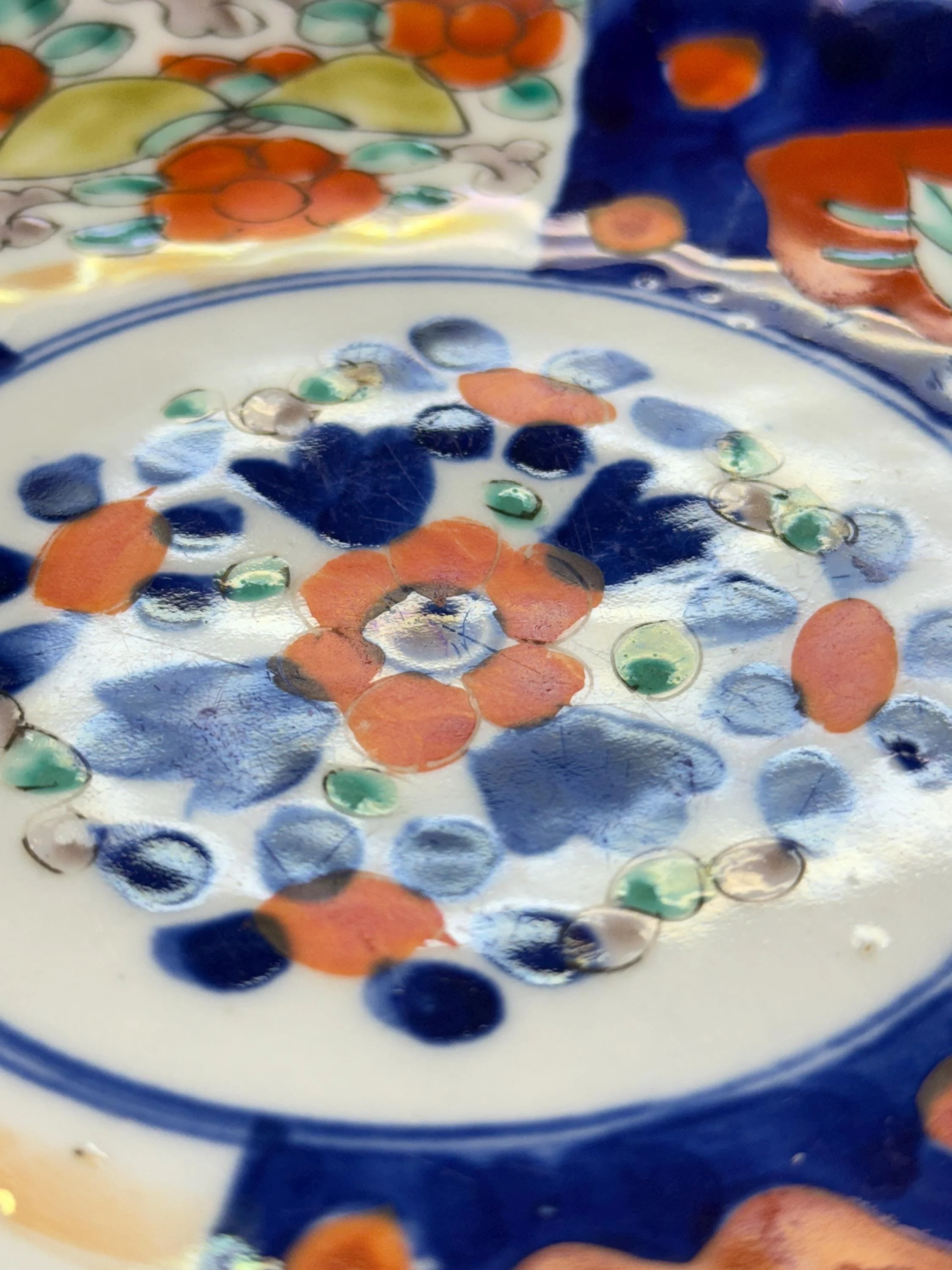
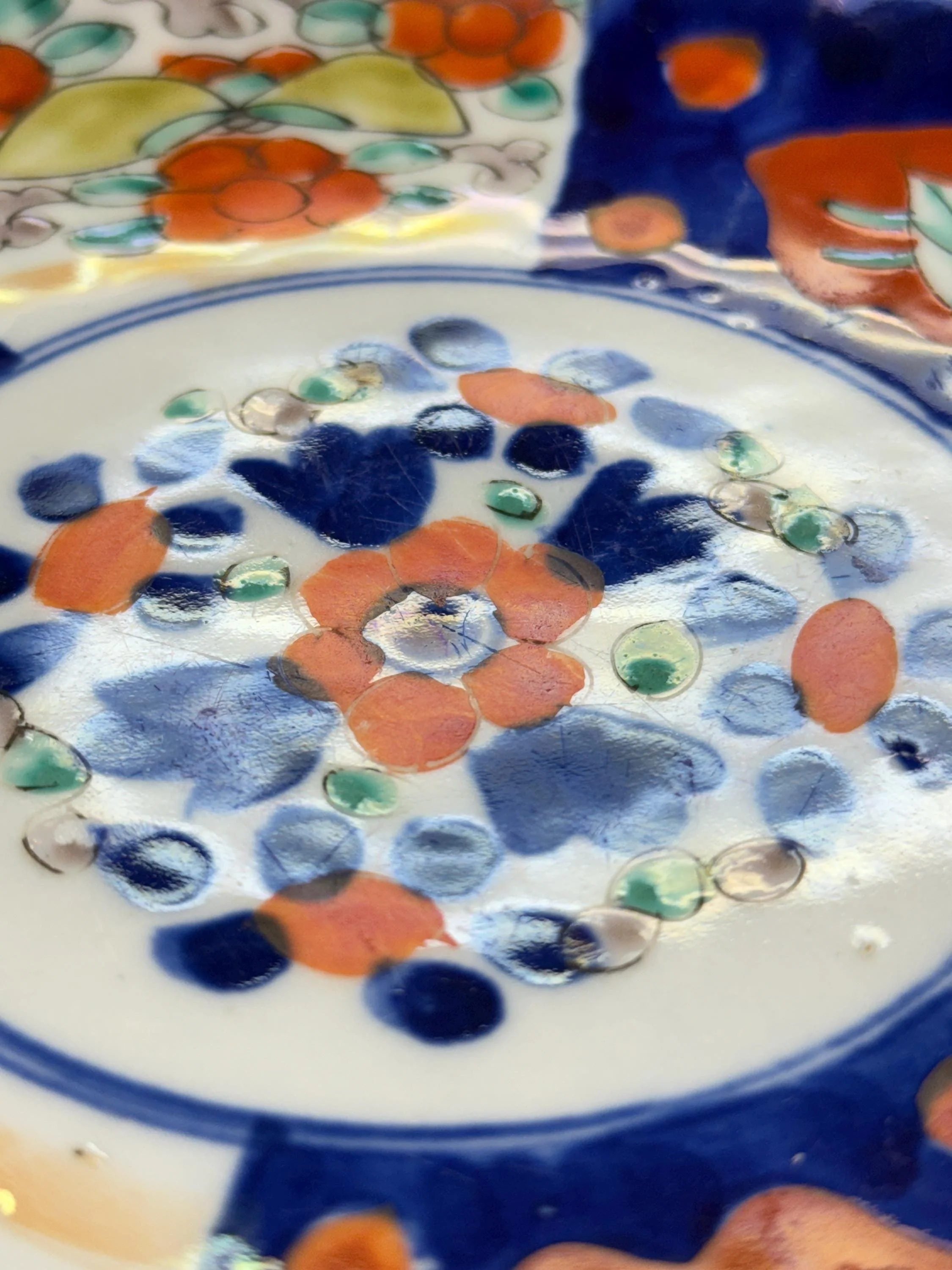
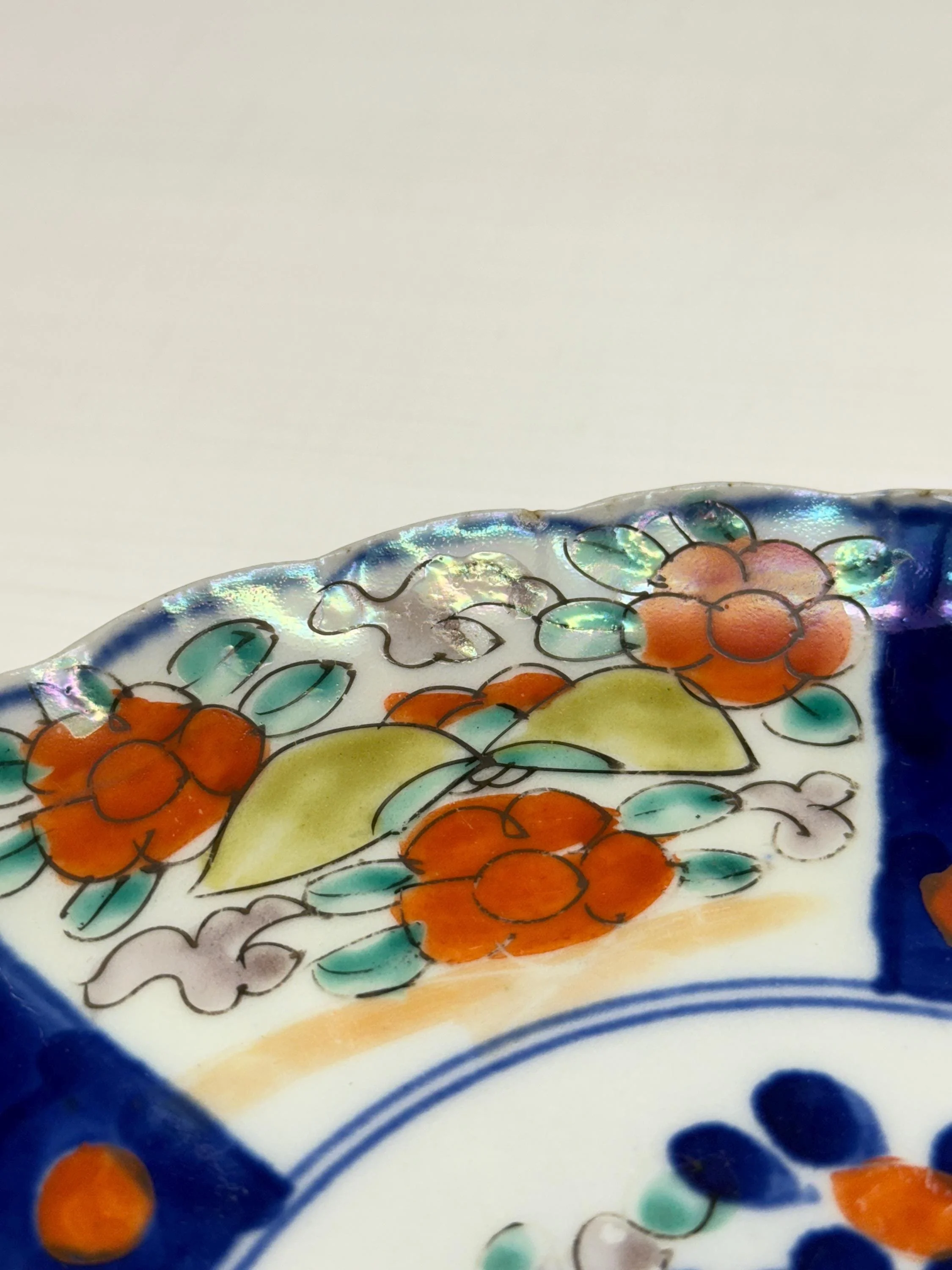
Each section is richly decorated with stylized floral motifs, including chrysanthemums and peonies rendered in bold Japanese palette colors. The center medallion is painted in deep cobalt with accents of red and green. Subtle iridescence appears along the rim where the overglaze enamels have gently aged — a hallmark of authentic older Imari.
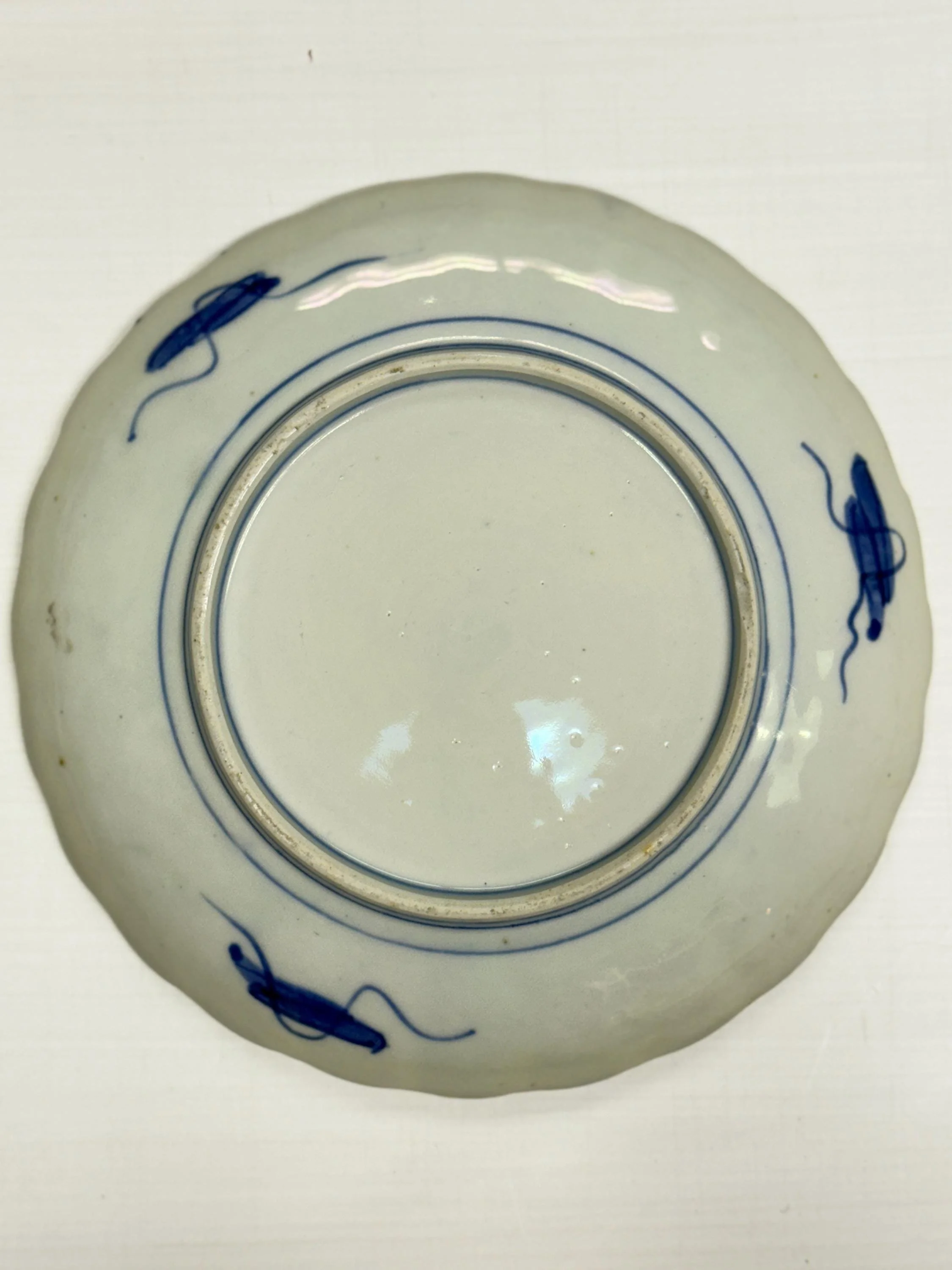
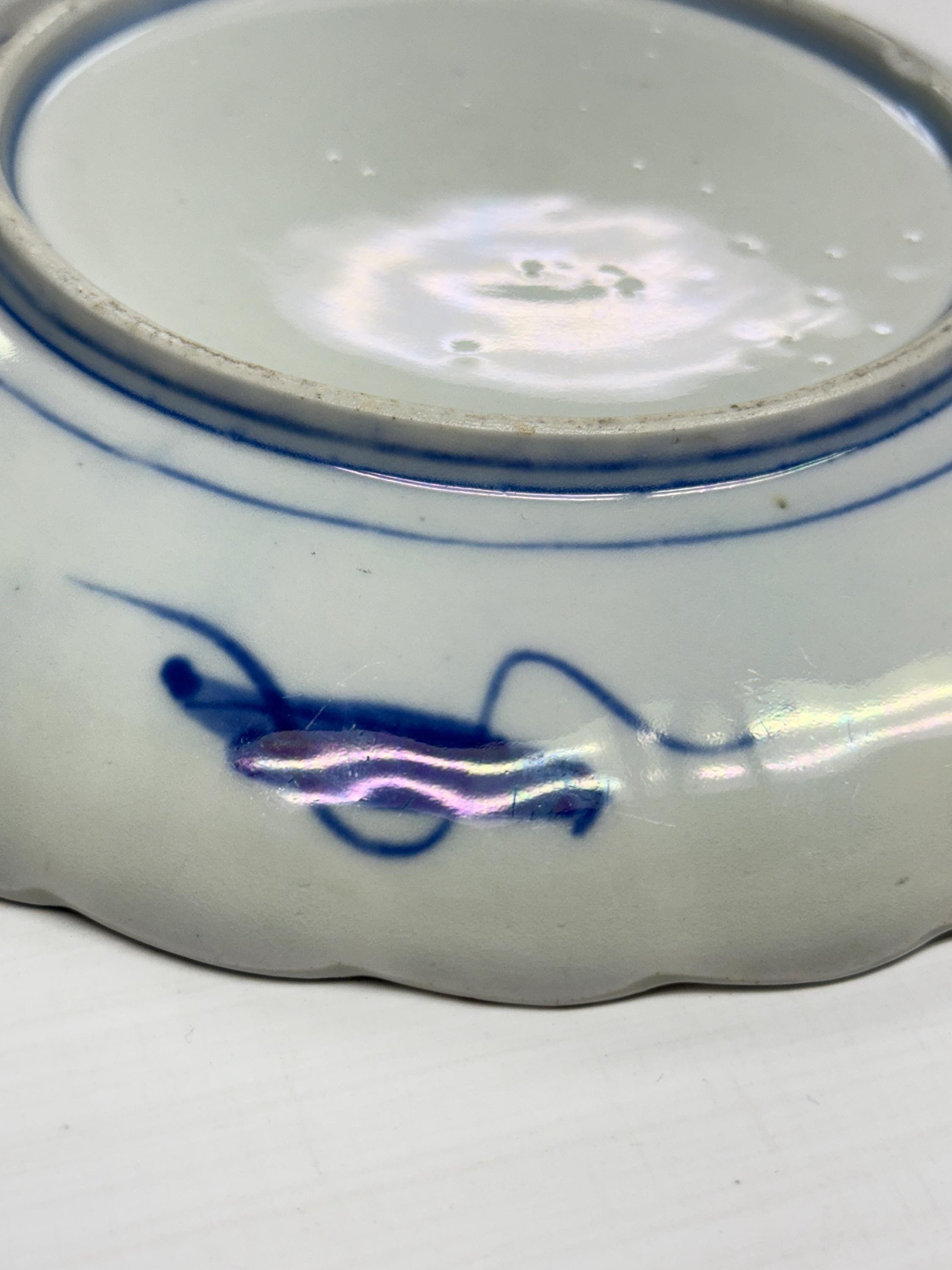
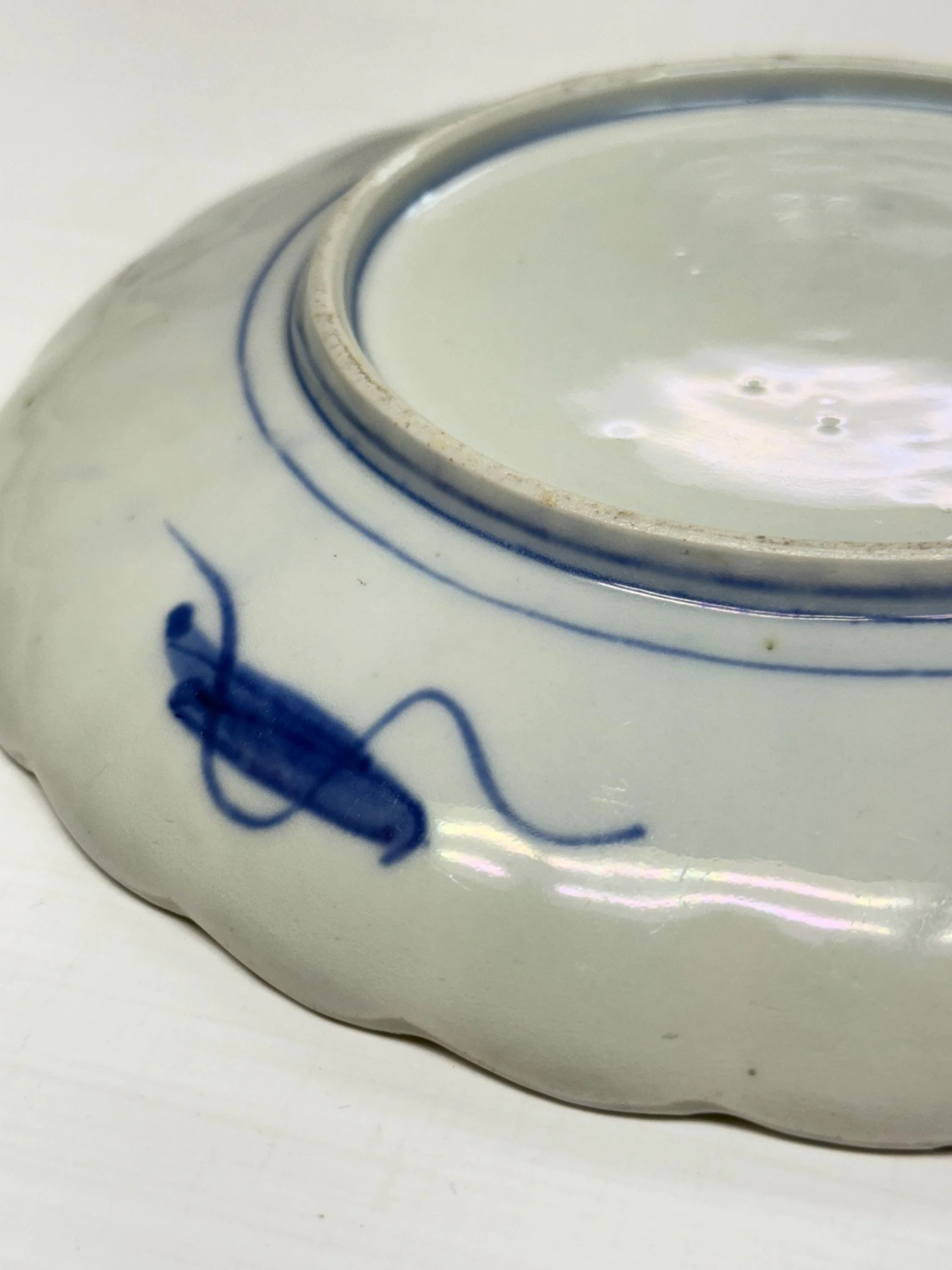
The underside shows traditional kiln workman’s marks in underglaze blue, typical of Arita production workshops of the early 20th century.
A striking collector’s piece and a beautiful display plate for wall mounting, shelving, or a curated Japanese ceramics collection.
Features Origin: Arita, Japan
Era: Meiji–Taisho–Early Showa (c. 1900–1930)
Technique: Hand-painted overglaze enamels
Design: Floral panel Imari pattern
Rim: Scalloped edge
Marks: Painter’s / kiln marks on underside
Type: Porcelain
8.5" dia
Very good antique condition with age-appropriate wear
Minor enamel wear to rim consistent with age
Colors remain vivid
This beautiful hand-painted Japanese Imari porcelain plate features a classic panel design with vibrant cobalt blue, iron red, gold, green, and soft lavender overglaze enamels. The scalloped rim and alternating decorative panels are characteristic of Arita Imari export ware, produced during the late Meiji to early Showa period (circa 1900–1930).
Each section is richly decorated with stylized floral motifs, including chrysanthemums and peonies rendered in bold Japanese palette colors. The center medallion is painted in deep cobalt with accents of red and green. Subtle iridescence appears along the rim where the overglaze enamels have gently aged — a hallmark of authentic older Imari.
The underside shows traditional kiln workman’s marks in underglaze blue, typical of Arita production workshops of the early 20th century.
A striking collector’s piece and a beautiful display plate for wall mounting, shelving, or a curated Japanese ceramics collection.
Features Origin: Arita, Japan
Era: Meiji–Taisho–Early Showa (c. 1900–1930)
Technique: Hand-painted overglaze enamels
Design: Floral panel Imari pattern
Rim: Scalloped edge
Marks: Painter’s / kiln marks on underside
Type: Porcelain
8.5" dia
Very good antique condition with age-appropriate wear